Categories
News Nicht kategorisiert

More than transporting, lifting and storing

More than transporting, lifting and storing

Efficient forklift use in practice

Effective is not automatically efficient

Effectiveness means achieving defined targets – such as high turnover rates or short throughput times. Efficiency goes one step further: it describes how much effort is required to achieve these goals.

An example from e-commerce:
A warehouse can turn over its entire inventory within 24 hours. If this target can even be achieved in 20 hours, this is undoubtedly effective. However, if an oversized fleet of forklift trucks, high labour costs, a lot of damage, frequent downtime or uncoordinated loading cycles have to be accepted, efficiency suffers – and ultimately profitability.

This shows that good performance alone is not enough. It must also be provided at a reasonable cost.

Not every forklift truck application needs optimisation

At the same time, it is important to remain realistic.
Not every company needs to analyse its forklift use down to the last detail. Anyone who uses one or two forklift trucks occasionally – for unloading pallets or storing materials, for example – uses the forklift truck primarily as a practical tool. In such cases, the benefits are obvious: time savings, relief for employees and greater safety.
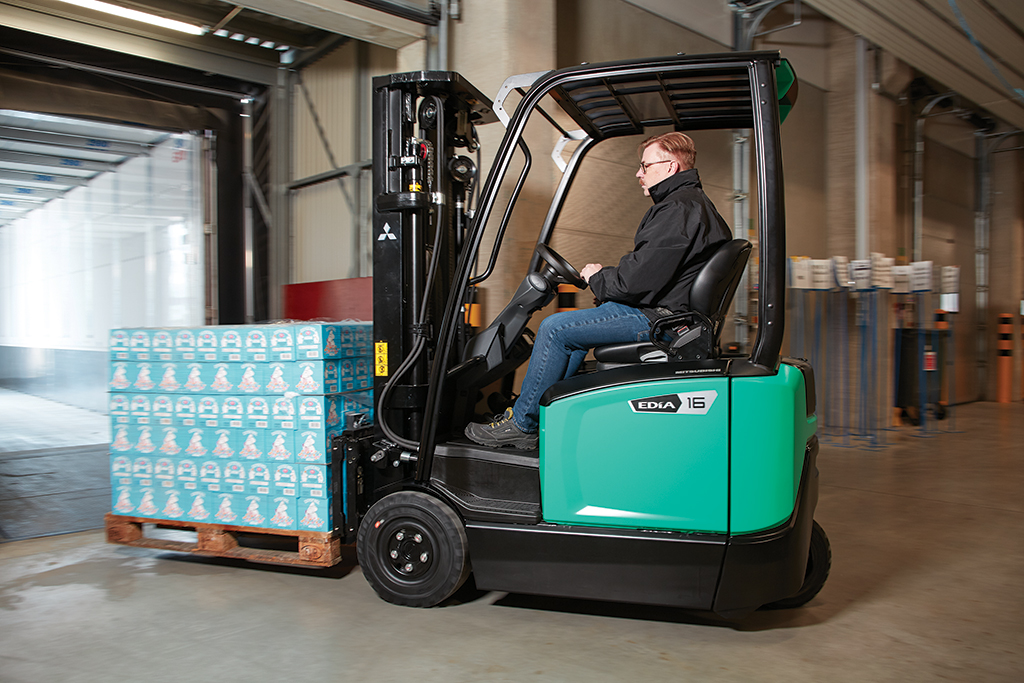
© Mitsubishi EDIA EM FB14-20(C)N2T Series

The situation is different when forklifts are an integral part of the value chain.
For example, in beverage wholesaling with indoor storage, outdoor areas and additional event services. Here, forklifts, pallet trucks and drivers are an essential part of daily business. Precision, availability, safety and speed have a direct impact on costs and revenue. In such environments, it is worth taking a closer look.

When others achieve more with less effort

The desire for optimisation is often not driven by the company itself, but by comparison:
A competitor achieves similar handling figures, but works with fewer machines, fewer staff or lower costs. This is the latest point at which processes, vehicle fleets and operating times are scrutinised.

The first step is always an honest stocktaking:

  • How have routes, warehouse structure or types of goods changed?
  • How many hours are the forklifts actually in use?
  • Are there many empty runs or downtimes?
  • How are machines and loads handled in everyday life?
  • Do all vehicles fulfil the current safety requirements?

These questions can often still be answered “from the gut” in small fleets. However, this becomes increasingly difficult as the number of vehicles grows.

Data instead of gut feeling

The larger the fleet, the more complex the evaluation becomes.
Manual recording of operating times, driving behaviour or downtimes is hardly realistic in day-to-day business. It costs time, ties up staff and often only provides snapshots.

This is where telematics comes into play.
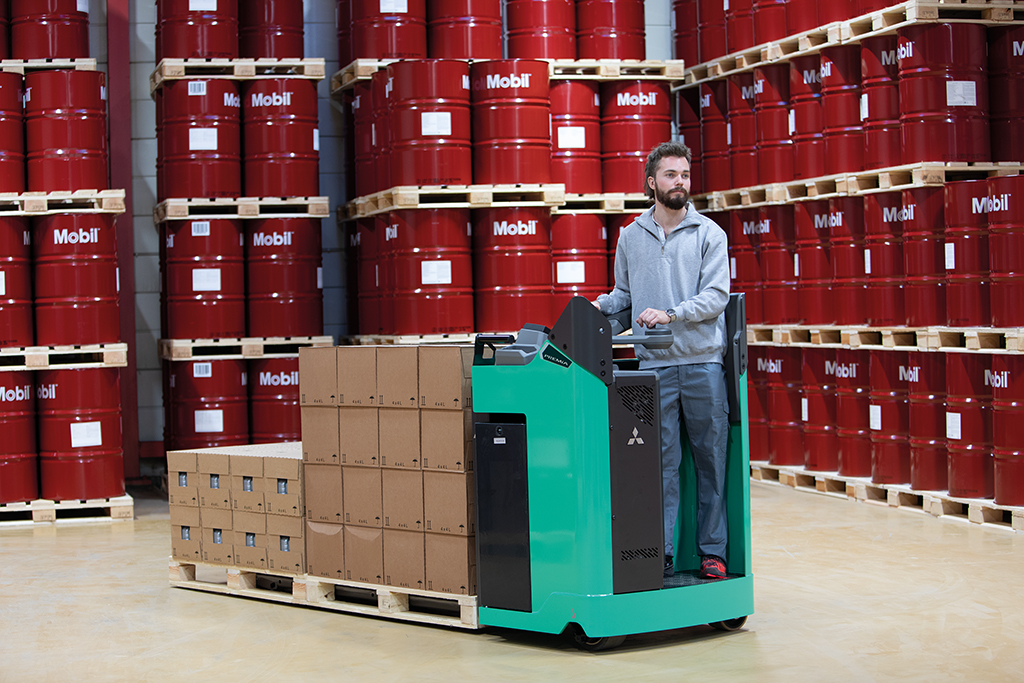
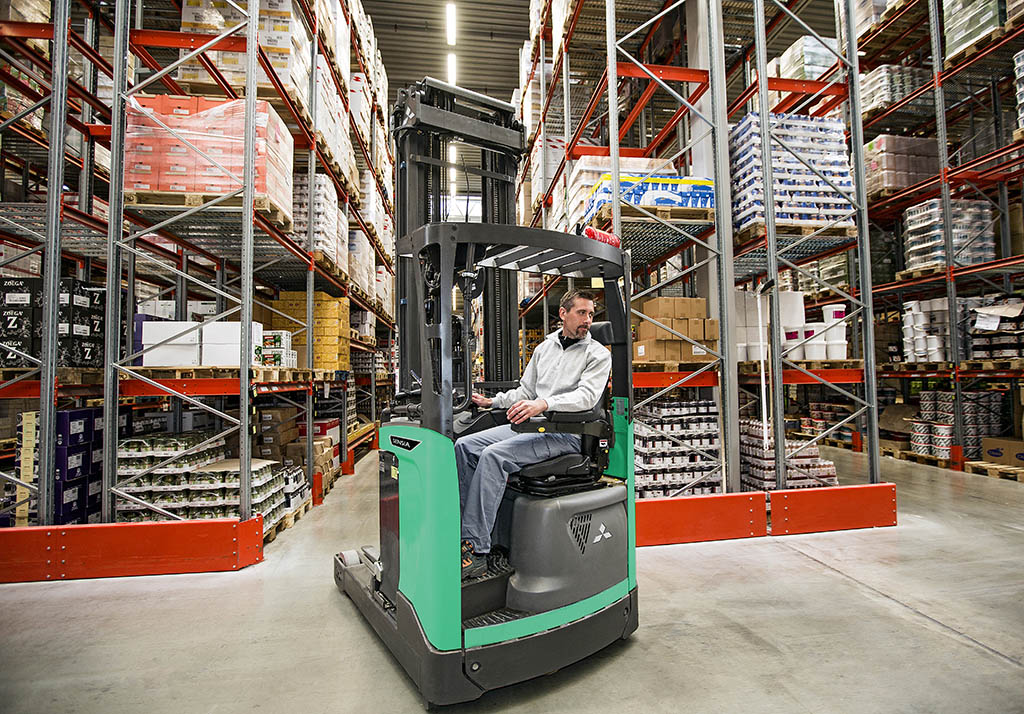
© Mitsubishi PREMIA EX PBR20-30N2 Series

Efficiency gains through telematics

Telematics systems record relevant data directly on the vehicle: usage, operating times, battery status, driving behaviour or load on the components. This information is analysed centrally and creates an objective basis for decision-making for the first time.

Typical questions can thus be clearly answered:

  • Which forklifts are heavily utilised – and which are hardly utilised at all?
  • Where do many empty journeys occur?
  • At what times do load peaks occur?
  • How do driving styles and utilisation differ between individual drivers?
  • When does maintenance make sense before failures occur?

This is particularly important for retailers:
Telematics does not replace experience – it supports it with facts.

The right machines for the right tasks

Efficient fleet management does not mean using as many vehicles as possible, but rather providing suitable vehicles for specific tasks.

A simple practical example:
A company uses telematics data to recognise that several electric forklift trucks with a high load capacity mainly travel short distances, rarely pick up loads and have long idle times. The analysis shows that some of these tasks could be better performed by low-platform trucks. Replacing machines not only reduces the vehicle fleet, but also the personnel and maintenance costs – with the same performance.

Such decisions can hardly be made on a sound basis without data. Telematics makes them comprehensible and economically justifiable.

Conclusion

Efficient forklift truck utilisation does not start with technology, but with an understanding of your own processes.
Telematics is not an end in itself, but a tool for creating transparency, recognising potential and making well-founded decisions. For dealers, this knowledge opens up one thing above all: the opportunity to provide customers with better advice – practical, comprehensible and based on real usage data.

Looking for equipment?
Categories
News

The future of intralogistics: will forklift trucks be replaced by AI robots?

The future of intralogistics: will forklift trucks be replaced by AI robots?

A reality check between Industry 4.0 hype and Logistics 5.0

Digital change is accelerating. Algorithms, artificial intelligence (AI) and autonomous systems seem to be outsourcing the logistical skills of entire forklift truck driver teams – firmly anchored in the belief that technology can do everything more efficiently, faster and cheaper. The focus of Industry 4.0 is clearly on automation, networking and maximising profits through digitalisation.

But while we are talking about fully automated “dark warehouses” in which armies of robots take command, a more nuanced picture is emerging. Experts are already talking about Logistics 5.0, where people are once again taking centre stage – supported by resilience, sustainability and ethical work design.

The reality of automation: limits and risks

Digital warehouses, controlled by AI, are a reality today. However, fully automated systems are only efficient as long as the parameters remain static. The Achilles heel of full automation is its rigidity:

  • Maintenance intensity: Repairs to the control system can lead to long downtimes.
  • Domino effects: A system failure often paralyses the entire flow of goods, with repercussions all the way to the end customer.
  • Investment risk: The smaller and more complex a warehouse (“brownfield”), the less profitable the use of highly complex AI systems becomes.

The players: Who will be travelling through the warehouse of tomorrow?

  • AGV / AGV (Automated Guided Vehicles): Follow rigid lines or wires.
  • AMR (Autonomous Mobile Robots): Navigate freely using SLAM technology (Simultaneous Localisation and Mapping).
  • Cobots: Collaborative robots that assist humans instead of replacing them.
  • Special robots: From palletisers and shelf-scanning robots to autonomous storage and retrieval machines.
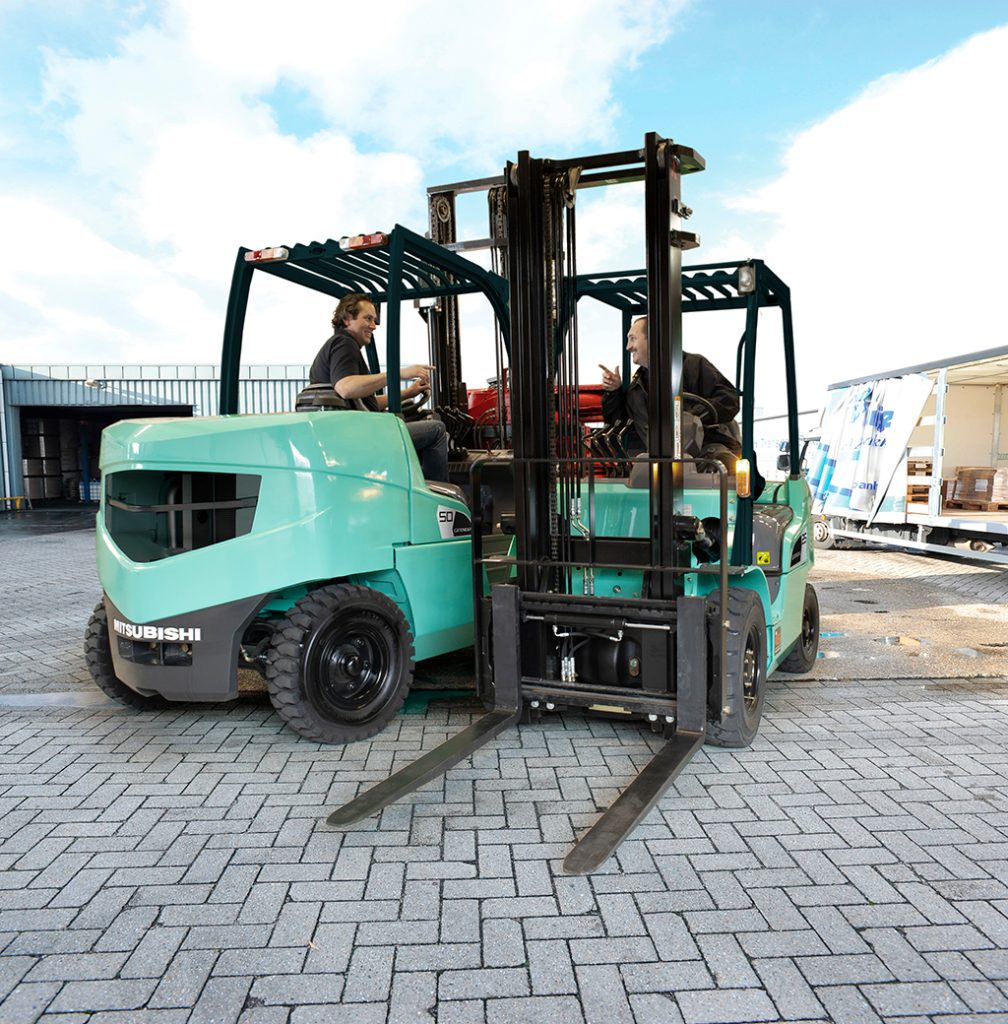
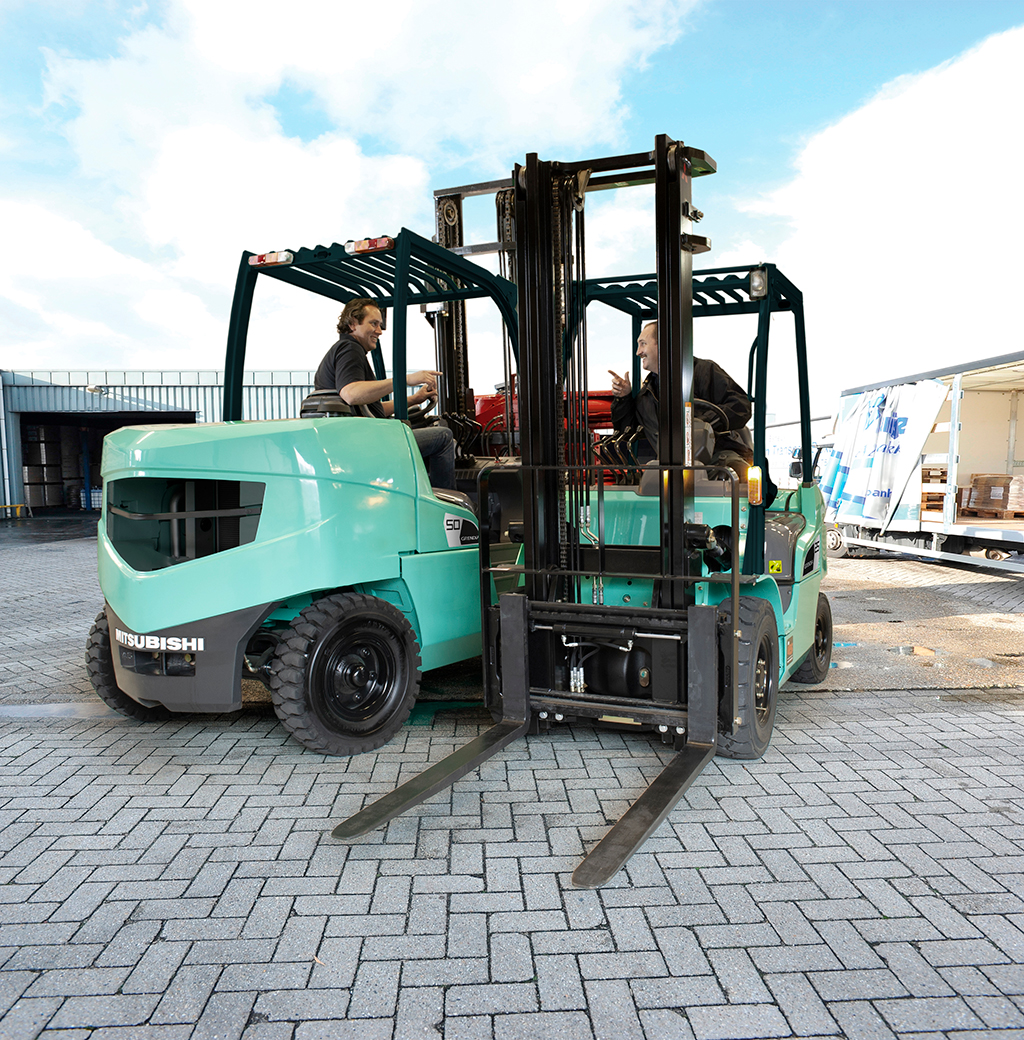
© Mitsubishi GRENDIA ES FD20-35N3 Series
© Mitsubishi SENSIA EM RB16-25N3(H)(S)(X) Series

Why the forklift truck stays:

  1. Flexibility: For unforeseen operations, complex loading and unloading of lorries or bulky goods, the man-machine combination is unbeatable.
  2. Smart Forklifts:Modernforklifts are networked. Telematics systems provide data on impact loads, maintenance intervals and route optimisation.

Conclusion: symbiosis instead of displacement

The answer to the question of the future is therefore not “man or machine”, but “man with machine”. If you want to remain competitive, don’t dispose of your forklift trucks, but integrate them into an intelligent, digital overall system.

Looking for equipment?

Categories
News

The future of intralogistics: will forklift trucks be replaced by AI robots?

The future of intralogistics: will forklift trucks be replaced by AI robots?

A reality check between Industry 4.0 hype and Logistics 5.0

Digital change is accelerating. Algorithms, artificial intelligence (AI) and autonomous systems seem to be outsourcing the logistical skills of entire forklift truck driver teams – firmly anchored in the belief that technology can do everything more efficiently, faster and cheaper. The focus of Industry 4.0 is clearly on automation, networking and maximising profits through digitalisation.

But while we are talking about fully automated “dark warehouses” in which armies of robots take command, a more nuanced picture is emerging. Experts are already talking about Logistics 5.0, where people are once again taking centre stage – supported by resilience, sustainability and ethical work design.

The reality of automation: limits and risks

Digital warehouses, controlled by AI, are a reality today. However, fully automated systems are only efficient as long as the parameters remain static. The Achilles heel of full automation is its rigidity:

  • Maintenance intensity: Repairs to the control system can lead to long downtimes.
  • Domino effects: A system failure often paralyses the entire flow of goods, with repercussions all the way to the end customer.
  • Investment risk: The smaller and more complex a warehouse (“brownfield”), the less profitable the use of highly complex AI systems becomes.

The players: Who will be travelling through the warehouse of tomorrow?

  • AGV / AGV (Automated Guided Vehicles): Follow rigid lines or wires.
  • AMR (Autonomous Mobile Robots): Navigate freely using SLAM technology (Simultaneous Localisation and Mapping).
  • Cobots: Collaborative robots that assist humans instead of replacing them.
  • Special robots: From palletisers and shelf-scanning robots to autonomous storage and retrieval machines.
© Mitsubishi GRENDIA ES FD20-35N3 Series
© Mitsubishi SENSIA EM RB16-25N3(H)(S)(X) Series

Why the forklift truck stays:

  1. Flexibility: For unforeseen operations, complex loading and unloading of lorries or bulky goods, the man-machine combination is unbeatable.
  2. Smart Forklifts: Modernforklifts are networked. Telematics systems provide data on impact loads, maintenance intervals and route optimisation.

Conclusion: symbiosis instead of displacement

The answer to the question of the future is therefore not “man or machine”, but “man with machine”. If you want to remain competitive, don’t dispose of your forklift trucks, but integrate them into an intelligent, digital overall system.

Looking for devices?

FORKLIFT - La red de distribuidores más grande de la industria

Comprar barato - ¡Vender más rápido!

¿Alguna pregunta?

Contáctanos directamente:

Ana Fischer


Country Manager Spain

+49 941-942794-24