Categories
Industry news

Assistance systems in industrial trucks

Assistance systems in industrial trucks

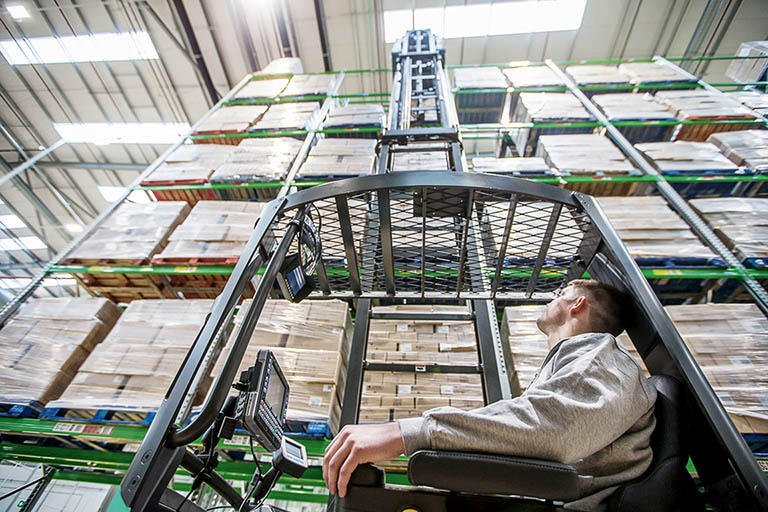
An assistance system is a technical, often fully automated solution that supports machine operators in carrying out their logistical tasks. It can provide important information and support, as well as intervene fully automatically where necessary. Increasingly based on artificial intelligence, these systems enhance safety and boost productivity in everyday handling operations.

Digital helpers are everywhere. Drivers know them well: there is a beep when reversing, a beep when moving forwards, and if we ignore it – because the threshold for triggering the warning is set quite low – the on-board computer may even initiate emergency braking. It can be irritating. On the other hand, adaptive cornering lights, adaptive cruise control and many other assistance systems are genuine improvements.

Industrial trucks have long been equipped with a wide range of digital assistance systems. In practice, legal requirements vary depending on the country, the industry and the application. As with any new business investment, it is important to determine what is necessary, useful and productive – and what is not.
For example: The owner of a small company employs three forklift drivers and has three forklifts. When buying a new truck, he chooses a model with PIN-code access because all individual seat and steering-wheel settings are saved and automatically adjusted for each driver. This means he no longer needs to set everything manually. However, he hardly ever drives a forklift himself, and his three drivers do not normally swap machines during day-to-day operations. From an economic perspective it is not essential, but it is a nice extra. Profitability is not always the only thing that matters.

Key assistance systems that prevent accidents and increase productivity

  • Adaptive cruise control reduces speed in bends, on uneven ground or when carrying heavy loads.
  • Stability and tilt-warning systems detect potentially dangerous tipping angles before the truck becomes unstable and warn the driver in good time.
  • Front and rear cameras or mirror-assist systems improve visibility, particularly to the rear and in narrow aisles.
  • Lift and load monitoring uses sensors to check load weight, centre of gravity and fork position, issuing a warning if capacity limits are exceeded.
  • Load stabilisation and mast-tilt adjustment ensure safe depositing, tilting and lowering of loads, even on uneven ground, and reduce mast sway at height.
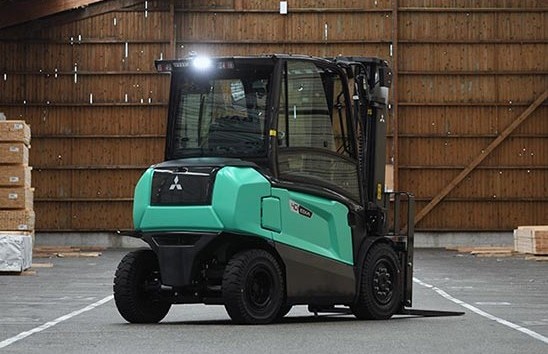
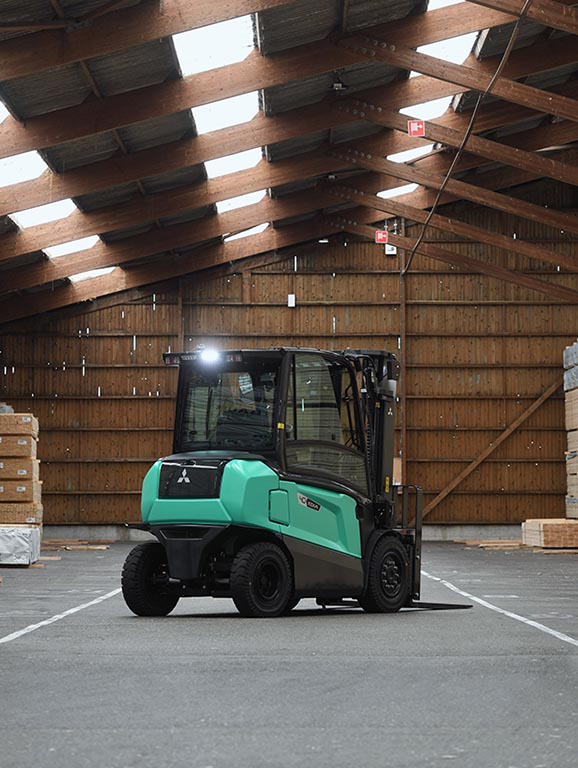
Mitsubishi EDiA XL with Blue-spot
© Mitsubishi EDiA XL with Blue-spot
© Mitsubishi SENSiA with sway control
  • Automatic fork positioning with laser sensors enables precise pallet handling while preventing damage to goods.
  • Pre-settable driving modes, similar to those in cars, provide added safety for beginners or full performance for experienced operators, depending on the task.
  • Sensorimotor controls adapt to the driver’s handling style; the system responds sensitively to steering movements and lever pressure, making operation more intuitive (steering, acceleration).
  • Automatic ramp-hold function prevents the truck from rolling backwards on slopes as soon as the accelerator pedal is released – the driver can simply step off; when they return and accelerate, the brake is released automatically.
  • PIN-code and other key systems prevent unauthorised use and automatically apply the stored preferences of each driver.
  • Adaptive load-distribution and gripping-angle systems adjust gripping and lifting angles to the size and shape of the load.
  • GPS and navigation systems optimise routes in outdoor areas and large indoor facilities and reduce travel times.

Systems with limited benefit (gimmicks)

  • Excessive numbers of cameras or sensors without meaningful application distract more than they contribute to safety.
  • LED “light shows” – too many warning lights (rear or side) – reduce the actual safety benefit because they distract more than they alert.
  • Complex network integrations without clearly defined operational processes create more cost than benefit and increase maintenance requirements.

Practical tips for new purchases

  • Create a checklist with your drivers of 5–10 aspects of the current forklift that could be improved. Then check how often these issues occur. Ask your forklift or warehouse-technology supplier for a quotation including the relevant assistance systems. Compare the costs and benefits – and remember that ergonomic workstations often result in fewer sick days and increased motivation, leading to higher performance.
  • Safety first: choose systems that demonstrably reduce risks (anti-tipping, collision-avoidance, load-warning systems).
  • Check compatibility: systems should match your load types, pallets, warehouse layout and existing fleet.
  • Training: assistance systems are only effective when drivers recognise and accept them as useful. This also requires regular updates and appropriate training.
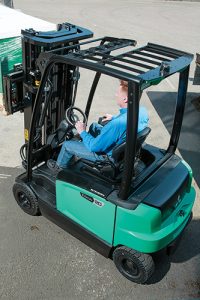
Mitsubishi EDiA EM 4Wheel (with laser on pallet)
Mitsubishi EDiA EM 4Wheel with automatic ramp stop

Conclusion

Assistance systems improve safety, reduce damage and increase productivity. In principle, all forklift trucks should be equipped with load monitoring, visual detection and obstacle-detection systems. Extravagant hardware or software without clear benefit should be avoided.
Despite these technological aids, the operator remains responsible: assistance systems do not replace daily visual inspections and do not absolve anyone – neither warehouse managers nor drivers – from their responsibility for the safety of people and goods in everyday operations.

Looking for devices?

Don’t want to miss anything?
Categories
Guides Industry news manufacture

Used Market Ranking 2024

Used Market Ranking 2024: The Most Popular Forklift Brands

Nothing works without them: Forklifts and warehouse equipment are essential for the flow of goods in any company. However, new devices are expensive, and not every company wants or can currently invest in them. A look at the used market shows that the number of high-performance and reliable used forklifts has recently increased significantly following the supply shortages of recent years. Therefore, buyers of used forklifts are finding more attractive and increasingly affordable offers.

One’s gain, another’s loss: For sellers, it is all the more important to be aware of which brands are currently selling particularly well and which brands have demand that even exceeds supply.

In our used market ranking, we take a detailed look at the most popular forklift brands in Europe in 2024.

Table of Contents

These are the most popular manufacturers in 2024 (see table).

The following table shows the representative market shares and an additional demand barometer for the top manufacturers.
Place Brand Market share Demand barometer
1 Linde 25,75% 0,87
2 Toyota 9,27% 1,33
3 Still 9,10% 0,62
4 Jungheinrich 8,04% 0,82
5 Manitou 5,92% 2,84
6 Hyster 4,57% 1,26
7 Kalmar 3,05% 2,28
8 Combilift 2,82% 2,89
9 Mitsubishi 2,34% 1,20
10 BT 2,26% 0,79
11 Yale 1,94% 0,64
12 Merlo 1,56% 5,50
13 Doosan 1,53% 0,90
14 CAT Lift Trucks 1,30% 1,65
15 HC (Hangcha) 0,89% 0,59
16 TCM 0,88% 2,58
17 JCB 0,77% 2,19
18 Nissan 0,76% 1,1
19 Cesab 0,75% 0,50
20 Unicarriers 0,75% 0,87

These brands are the most purchased:

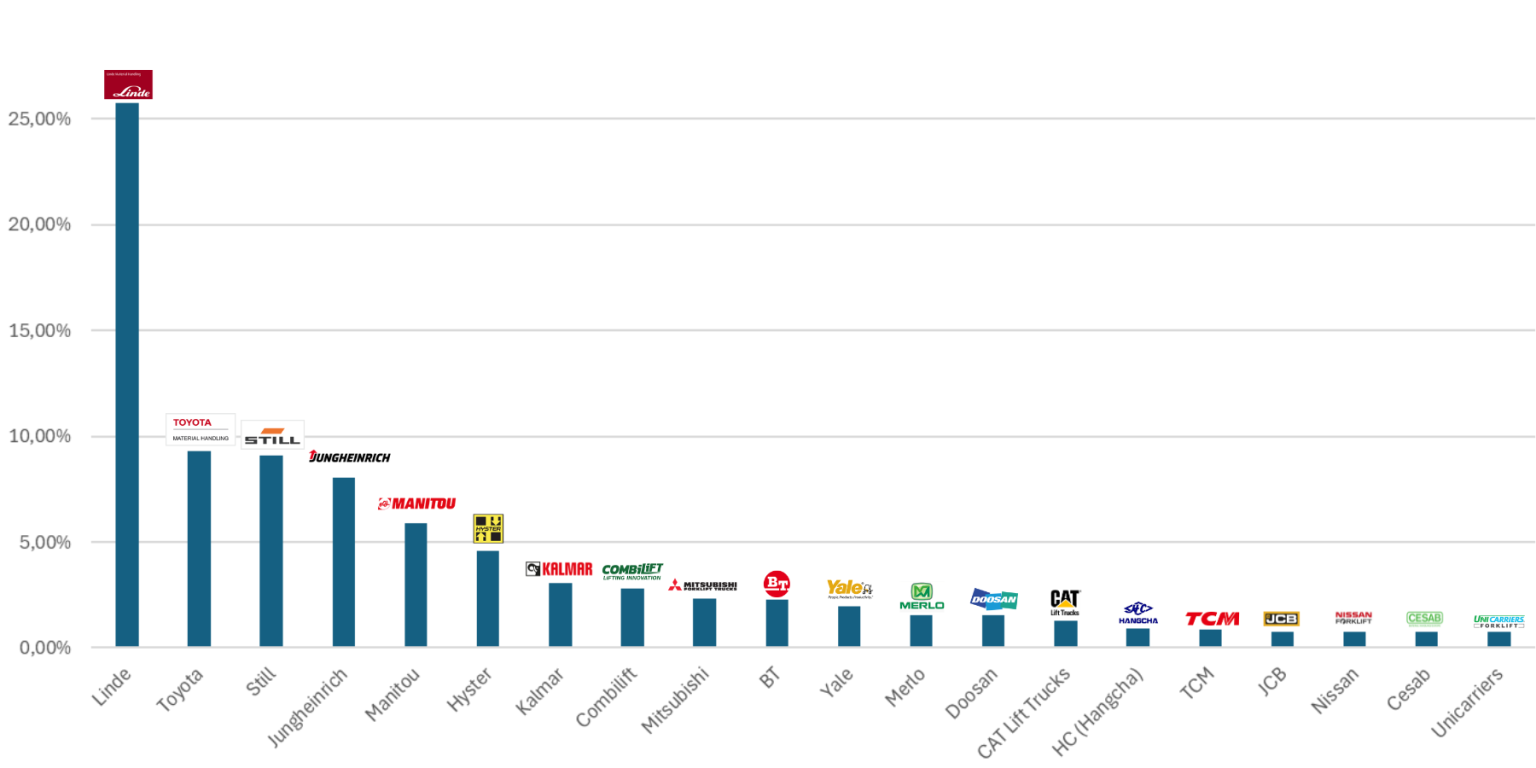
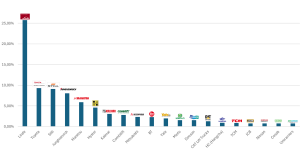
Graph - Die beliebtesten Staplermarken 2024
These brands will be the most purchased used forklifts in 2024 (Source: Forklift).

The European forklift equipment market in 2024 will be characterised by a mix of established market leaders and innovative niche suppliers.

As expected, Linde dominates the European field. However, there is a small surprise in second place with Toyota. While the Japanese manufacturer is the international leader in the new equipment market, it has so far mostly been behind Linde, Still and Jungheinrich in the European used equipment market.

The top 3 manufacturers at a glance:

Platz 1:
Linde Material Handling
Platz 1: Linde Material Handling

With an impressive market share of 25,75%, Linde’s used industrial equipment is sold almost as often as the 2nd, 3rd and 4th largest manufacturers combined. Linde Material Handling equipment are particularly popular on the used market because they are known for their high reliability, durability, and excellent service coverage.

Platz 2:
Toyota Material Handling
Platz 2: Toyota Material Handling

Toyota Material Handling overtook Still and Jungheinrich to take second place with a share of 9,27%.

The Japanese manufacturer secured second place thanks to a wide and high-quality product range, a good service network, and what is perceived by many to be a good price/performance balance.

Platz 3:
STILL
Platz 3: STILL

With a share of 9,10%, STILL trucks are the third most sold brand in the European used truck market. STILL equipment is particularly popular due to its advanced technology, ergonomic design, and high energy efficiency, making it a reliable and cost-effective choice for many companies.

The hottest brands 2024:

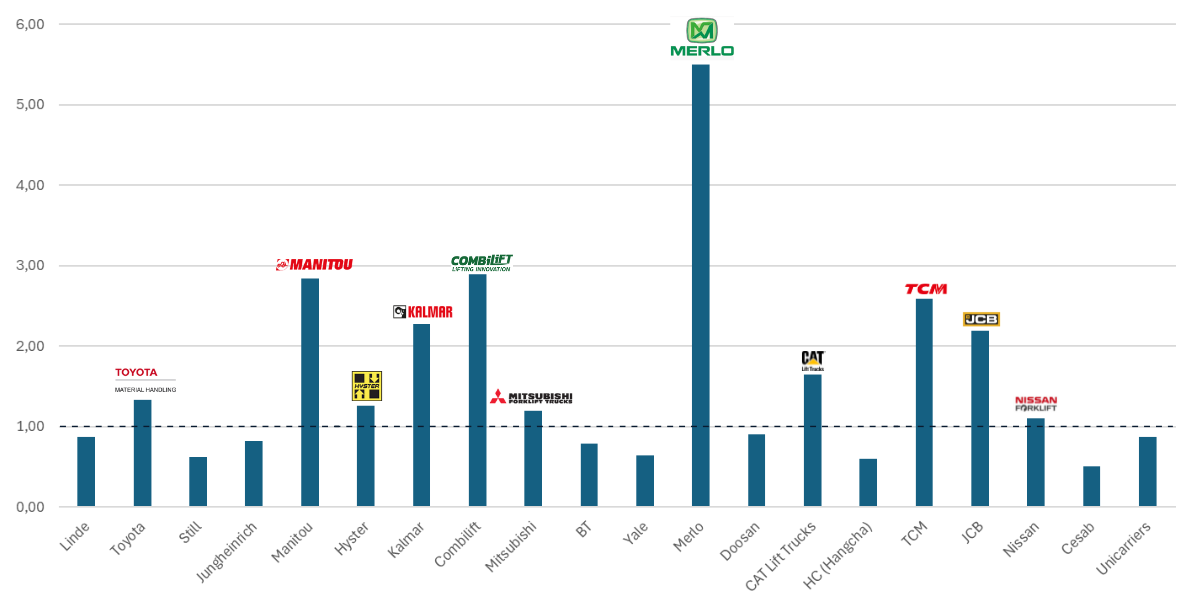
If you want to sell a forklift truck, it is not only the number of trucks sold that is of interest but also the number of trucks offered by competitors. Below, we have analysed which of the top 20 brands have particularly high demand combined with low supply. The result is the “hottest” forklift brands of 2024!

Diese Staplerbrands verkaufen sich besonders gut in 2024!
These brands have high demand relative to supply in 2024 (Source: Forklift).

The graph shows the popularity of certain brands in relation to the available used stock. A resulting “demand barometer” of 1 means that a forklift is offered as often as it is demanded. Any equipment with a coefficient greater than 1 is therefore in relatively high demand and considered “hot”.

Let’s take a closer look at Linde Material Handling:

  • Linde brand forklift trucks account for 25,75% of all requests. However, 29,58% of all forklift truck listings are Linde equipment. Put in proportion, this results in a coefficient of
    25,75%29,58% = 0,87

In the example of Winner Merlo, this results in a coefficient of 5.50. This is because the equipment has an enquiry share of 1.56%, while it only accounts for 0.28% of all listings.

The top 3 hidden champions at a glance:

Platz 1:
Merlo
Platz 1: Merlo

“Merlo telehandlers: by professionals for professionals”—this is how the manufacturer describes itself on its website. This tagline provides direct insight into why the telehandler specialist’s machines are so popular: customer-centered solutions coupled with a fast service network catapult Merlo to first place among the hidden champions!

Platz 2:
Combilift
Platz 2: Combilift

The specialist for multidirectional forklift trucks delivers outstanding solutions, particularly in the area of long goods handling. It’s no wonder that Combilift’s equipment resonates with many customers, securing second place.

Platz 3:
Manitou
Platz 3: MANITOU

Thanks to its high-quality product range, the French manufacturer, which is particularly well-known for its rough-terrain and telescopic forklift trucks, not only achieved a phenomenal 5th place in the overall ranking but also 3rd place among the hottest brands of 2024! Chapeau!

FORKLIFT - La red de distribuidores más grande de la industria

Comprar barato - ¡Vender más rápido!

¿Alguna pregunta?

Contáctanos directamente:

Ana Fischer


Country Manager Spain

+49 941-942794-24